
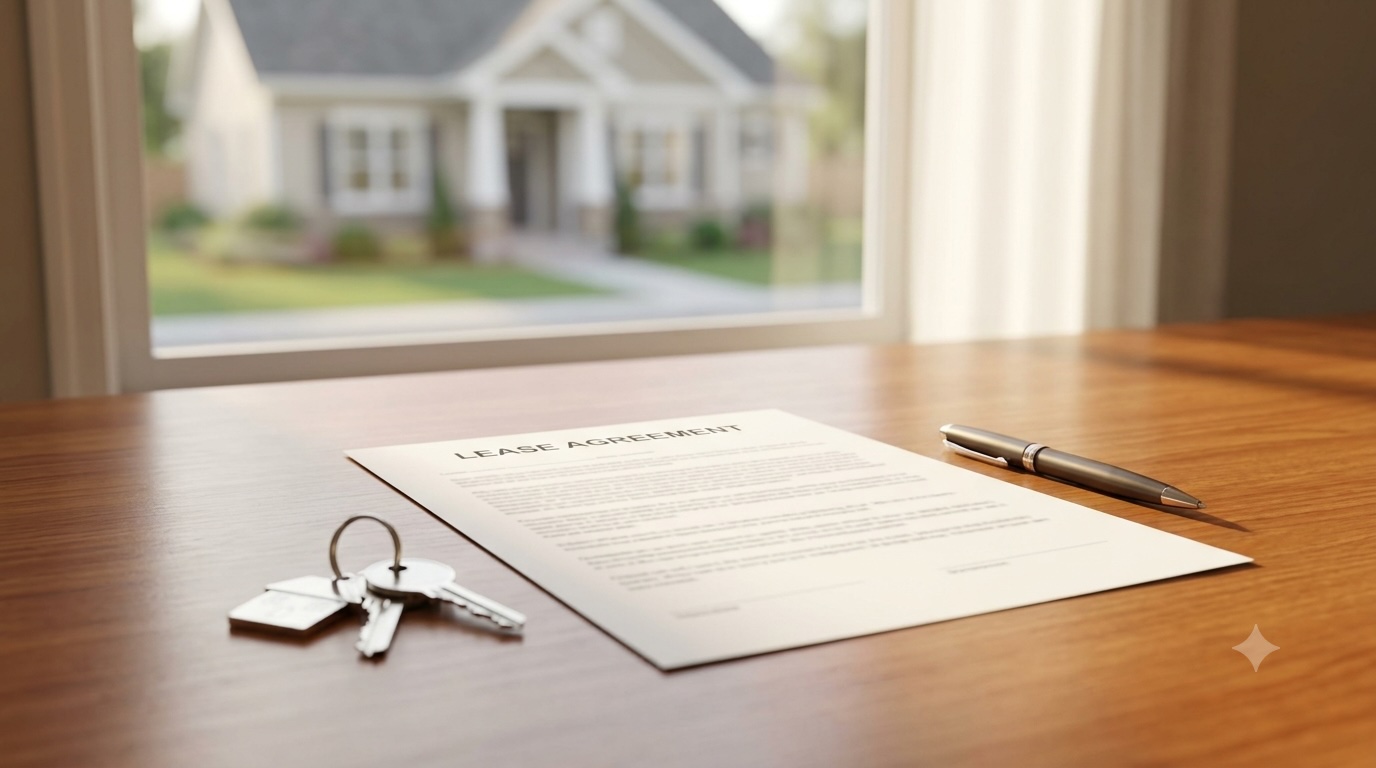
📋 Key takeaways for Lake County owners
HB3564 was signed on June 26, 2026, as Public Act 104-0479 and takes effect statewide on January 1, 2027.
The law bans a specific list of fees, including lease renewal fees, after-hours maintenance charges, and pest control charges when the tenant did not cause the problem.
Application and background check fees are capped at $50, and late fees are capped at $10 on the first $1,000 of monthly rent plus 5% of any amount above that.
Every non-optional fee must appear on the first page of the lease. A tenant does not owe a fee that is missing from that first page.
📍 What HB3564 is and where it stands
House Bill 3564 amends the Illinois Landlord and Tenant Act with a new section on rental fee transparency and limitations. Supporters called it the junk fee bill, and the label stuck in most of the news coverage. Governor Pritzker signed it on June 26, 2026, and it became Public Act 104-0479.
The original text would have taken effect on July 1, 2026. Lawmakers passed a companion trailer bill, HB5234, which moved the effective date to January 1, 2027, and gave housing providers a runway to update leases and fee schedules. That means Lake County landlords have the rest of 2026 to get compliant, and every lease signed from January 1, 2027, forward needs to follow the new rules.
The law applies throughout Illinois, including Gurnee, Libertyville, Mundelein, Lindenhurst, Waukegan, and every other Lake County community. Unlike the Chicago Residential Landlord and Tenant Ordinance, which stops at the city line, this one reaches single-family rentals and small buildings in the suburbs.
🚫 The fees you can no longer charge
The heart of the law is a list of prohibited fees. Starting January 1, 2027, a landlord may not charge a tenant or applicant any of the following.
A fee to modify or renew a lease
A fee for an eviction notice or eviction filing before a court has entered an order awarding those costs
A fee for an after-hours maintenance request
A fee to contact the owner or the property manager
A travel or trip charge for a maintenance visit
A fee to use a maintenance hotline
A fee for routine maintenance
A pest control or pest abatement charge when the tenant did not contribute to the infestation
A fee for a move-in or move-out walkthrough inspection
Some of these were never common among individual owners in Lake County. Contact fees and hotline fees mostly show up in large corporate portfolios, and those practices are what drove the bill. Others hit closer to home. Lease renewal fees and trip charges for maintenance visits appear in many suburban leases, and those clauses become unenforceable in new leases under the act.
The bill also tightened the rules around move-in charges. The trailer bill adjusted how security deposits, move-in fees, and move-out fees interact, so if your lease currently stacks more than one of those, have an attorney review that clause against the final statute before your next signing.
💳 The $50 application fee cap
Application and background check fees are capped at $50 per applicant. There is one exception. If a landlord uses a third-party screening service and the actual cost exceeds $50, the landlord may pass through the actual cost. The landlord must pay the vendor up front, then bill the applicant and provide a receipt for the third-party charge within 14 days.
In practice, most screening in Lake County already falls under the cap. A typical credit and background package from the major screening vendors runs between $30 and $50 per applicant. The change matters most for owners who used application fees as a revenue line or as a casual filter. Under the new law, the fee covers the cost of screening and nothing else.
⏰ Late fees have a new ceiling and a new clock
The act sets a statewide formula for late fees. A late charge may not exceed $10 on the first $1,000 of monthly rent plus 5% of any amount above $1,000. It also sets a timing rule. A late fee cannot be charged until the rent is at least five days past due.
Here is what that looks like on a typical Lake County rent. On a $2,200 lease, the maximum late fee is $10 on the first $1,000 plus 5% of the remaining $1,200, which is $60, for a total of $70. A flat $100 late fee, which is common in older lease templates, would exceed the cap on that rent and would need to come down.
If this formula sounds familiar, it should. It follows the same structure as the late-fee cap Chicago landlords have lived with under the RLTO for years, but with a higher dollar threshold. The state has now extended that approach to the suburbs.
📄 Every fee goes on page one of the lease
The transparency requirement may end up mattering more than any single fee ban. All non-optional fees, whether one-time or recurring, must be listed explicitly on the first page of the lease agreement. If a fee is missing from the first page, the tenant is not liable for it.
That is a strict rule with a simple consequence. A valid fee buried on page seven becomes uncollectible. Owners who use long-form lease templates should plan on adding a fee summary block to page one and keep it current at every renewal.
Listings get a disclosure duty too. The lease and the unit listing must state whether utilities are included in the rent. For most Lake County single-family rentals, the answer is that the tenant pays utilities directly, and going forward, the ad needs to say so.
⚖️ Who is exempt
The law exempts owner-occupied buildings with six or fewer units. If you live in one unit of your Waukegan two-flat and rent out the other, the new fee rules do not apply to that property.
Almost every investment property falls outside that exemption. A single-family rental you do not live in is covered. A condo you rent out is covered. A small multifamily building where you live elsewhere is covered. For the typical Lake County investor, the practical assumption should be that every door in the portfolio is subject to the act.
Enforcement runs through the courts. The act creates a private right of action, which means a tenant who is charged a banned or undisclosed fee can sue for an injunction, money damages, attorney fees, and costs. There is no state agency to satisfy and no grace period after the effective date. The exposure starts with the first noncompliant lease signed in 2027.
✅ What Lake County owners should do before January 1, 2027
The six-month runway is the useful part of this story. Here is a practical order of operations.
Audit your lease template now. Search it for every fee, fine, and charge. Anything on the banned list comes out. Anything that survives moves to a fee summary on page one.
Rework your late fee clause. Apply the $10 plus 5% formula to your actual rents and update the dollar amounts or switch the clause to the statutory formula. Confirm the clause waits until rent is five days past due.
Check your application fee. If it is above $50, either bring it down or set up the third-party pass-through with receipts inside the 14-day window.
Update your listings. Add the utility disclosure and the fee disclosures to your advertising template so that every new listing automatically complies.
Time your renewals. Leases signed before January 1, 2027, follow the old rules for their term. Renewals signed after that date need the new lease language, and the renewal itself cannot carry a renewal fee.
Owners working with a property manager should ask one direct question this fall. Which of the manager's standard charges to tenants survive HB3564, and what does the compliant lease look like? Cruise Property Management is updating its Lake County lease templates and fee schedules ahead of the deadline, and the earlier posts on 2026 Illinois leasing requirements and encouraging lease renewals cover the adjacent compliance and retention questions.
❓ Frequently asked questions
What is Illinois HB3564?
HB3564 is a state law, now Public Act 104-0479, that amends the Illinois Landlord and Tenant Act. It bans a list of rental fees, caps application fees at $50, caps late fees, and requires every non-optional fee to appear on the first page of the lease.
When does HB3564 take effect?
January 1, 2027. The bill originally carried a July 1, 2026, date, and the trailer bill HB5234 moved it to give housing providers time to update leases.
What fees does HB3564 ban?
Lease modification and renewal fees, eviction notice and filing fees before a court order, after-hours maintenance fees, fees to contact the owner or manager, maintenance travel and hotline fees, routine maintenance fees, pest control fees when the tenant did not cause the infestation, and move-in and move-out walkthrough inspection fees.
Does HB3564 apply to small landlords?
Yes, in most cases. The only exemption is for owner-occupied buildings with six or fewer units. A rental property the owner does not live in is covered regardless of size.
Who manages rental properties in Lake County, IL?
Cruise Property Management offers full-service property management for Lake County owners, including HB3564-compliant leasing. Visit the Lake County property management page for details.
Sources. Illinois General Assembly, HB3564, 104th General Assembly, Public Act 104-0479, signed June 26, 2026, effective January 1, 2027, and trailer bill HB5234, Public Act 104-0514. Bill text and status at ilga.gov. This article is a plain-language summary for general information. For decisions about a specific lease or property, consult an Illinois attorney.
About the author
Soh Tanaka is the founder of Cruise Property Management and a licensed Illinois real estate broker who has managed rental properties since 2008. Cruise Property Management specializes in Lake County, IL, and serves owners and investors with full-service property management.
Wondering what HB3564 means for your lease?
Cruise Property Management is updating its Lake County leases and fee schedules ahead of the January 2027 deadline. Get in touch.